
Lease, rent, store or sell: what each option costs an RV owner
An RV you rarely use has four realistic futures. Each one trades money, time and wear differently. This page puts them next to each other so the trade is visible before you commit.
The real question is not which option is best. It is which costs you would rather carry.
The four options on one table
Structural differences only. Where a number depends on the Lease A RV program specifically, it is marked for confirmation.
| Factor | Long-term lease | Short-term rental | Storage | Sell |
|---|---|---|---|---|
| Who uses the RV | One lessee for the term | A different renter each booking | Nobody | The buyer, permanently |
| Handoffs | Start and end of each term | Before and after every trip | None | One, final |
| Owner time | Enrollment, then periodic updates | Messages, cleaning and turnover per booking | Seasonal checks and battery care | Listing, showings and paperwork, once |
| Wear pattern | Steady, lived-in use | Bursts of heavy trip use | Aging from sitting | No longer yours |
| Insurance | Client to confirm: insurance arrangement during the lease | Platform coverage plus your own policy terms | Your policy, often reduced storage coverage | Ends at sale |
| Money in | Client to confirm: owner payment structure and typical range | Per booking, uneven by season | None | Sale price, once |
| Money out | Client to confirm: owner fees or costs, if any | Platform fees, cleaning, repairs between trips | Lot fees, insurance, registration | Loan payoff, any selling costs |
| Keep the RV? | Yes, returned at term end | Yes, between bookings | Yes | No |
Storage: the option that looks free and is not
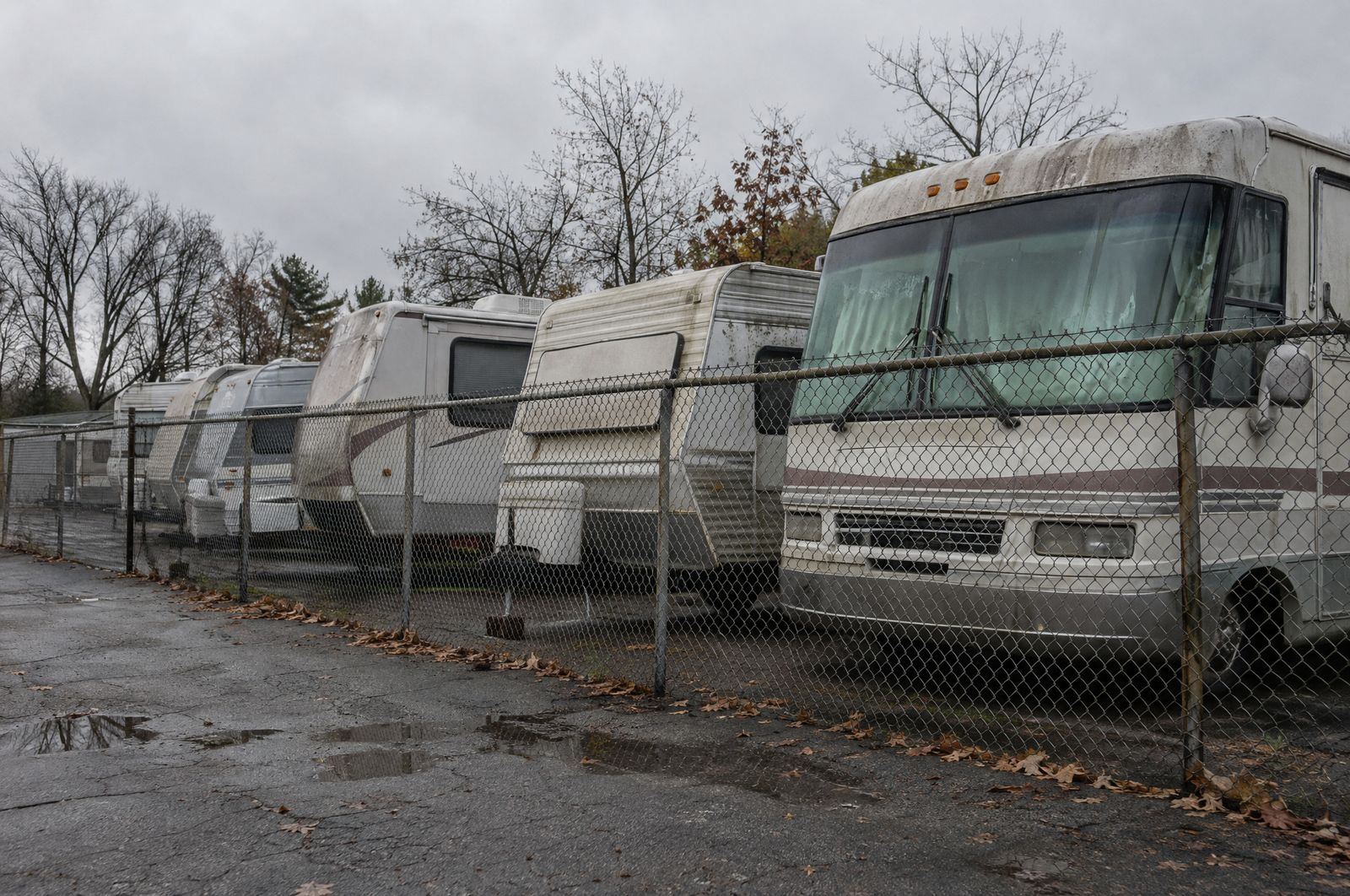
Storage feels like doing nothing, which is why it is the default. But a stored RV keeps costing money and keeps aging. The lot fee is the visible part. Registration and insurance renew on schedule. Depreciation continues whether the odometer moves or not.
The less visible part is what sitting does to the coach itself:
- Tires dry out and crack with time and UV exposure, and a heavy coach parked in one spot can develop flat spots. A tire with plenty of tread can still be too old to trust.
- House batteries self-discharge. Left unattended for a season, a lead-acid battery can sulfate to the point it will not hold a charge.
- Generators that never run tend to develop fuel problems, which is why most manufacturers call for regular exercise under load.
- Roof and slide seals are not inspected because nobody is there. A slow leak in a stored RV can go unnoticed for months.
- Rodents and insects move into quiet vehicles.
None of this means storage is wrong. If you use the RV often enough that it rarely sits more than a few weeks, storage between trips is reasonable. The problems compound when "between trips" becomes most of the year.
Covered or indoor storage reduces UV and weather exposure but does nothing for batteries, generators or seals that need use and attention. A roof over the RV slows aging; it does not stop it.
Short-term rental vs. long-term lease
Both put the RV to work. The difference is in how often it changes hands.
Peer-to-peer rental platforms book the RV by the night or the week. Each booking brings a new renter, a handoff, a walkthrough, a cleaning, a check for damage and a turnaround before the next guest. Income tracks demand, so it is strongest in peak season and thin the rest of the year. Owners who do well with rentals usually treat it as a part-time hospitality business, because that is what it becomes.
A long-term lease places the RV with one lessee for an extended term. There is one handoff at the start and one at the end. The RV is used steadily, often as a home base or for an extended stretch of travel, and the owner is not involved in day-to-day use. The terms of the Lease A RV program are on the how it works page, with figures pending: Client to confirm: lease term length and owner payment schedule.
How wear differs
Rental wear arrives in bursts. Renters are often new to RVs, so systems get operated by people learning them: slides run with something in the way, tanks dumped in the wrong order, awnings left out in wind. Each trip also adds a handoff where damage can go unnoticed until the next renter reports it.
Lease wear is steadier. One lessee learns the coach and lives with its quirks. The wear is real, because daily use consumes carpet, cushions and tire tread, but it accumulates in one documented period with one responsible party.
How owner time differs
Rental owners answer booking messages, coordinate key exchanges, clean or pay for cleaning, restock, and inspect after each trip. Lease owners do the enrollment work once and then receive updates. If your goal is income without a second job, that gap matters more than any per-night figure.
Selling: the clean break
Selling removes every ongoing cost and every ongoing decision. If you are honest with yourself that the RV years are over, it is often the right call, and leasing a coach you never plan to use again only postpones the decision.
The case against selling is timing. RVs lose value on a curve, and selling during a slow market or with a loan balance close to the sale price can leave little in hand. Some owners lease for a period specifically to wait out a soft market or to keep the RV for a future they expect, such as retirement travel a few years out.
Before deciding between leasing and selling, get a current payoff figure from your lender and a realistic market value for your exact year, make and model. The gap between the two numbers often makes the decision for you.
Insurance: where owners get caught
Insurance is the most common place an owner's assumptions break. A personal RV policy is written for personal use. Many exclude periods when the RV is rented or leased to someone else, and an owner who rents or leases without checking may find a claim denied.
- Rental platforms typically provide coverage during bookings, with their own deductibles, limits and exclusions. Read them.
- Storage usually allows reduced coverage, but liability, theft and weather damage coverage still matter.
- For a lease, the questions are who carries the policy, whether it covers use by the lessee, and what the deductible is. For this program: Client to confirm: who insures the RV during the lease, coverage types and deductibles.
Call your own agent too. Tell them exactly what you plan to do and ask what changes on your policy. Get the answer in writing.
Which option fits how you actually use the RV
Be honest about last year's calendar, not the one you planned.
Pick the cost you would rather carry
Storage costs money and lets the RV age quietly. Rental makes money and costs you time and turnover wear. Selling ends both, along with the RV. A long-term lease sits between them: the RV stays yours and gets used, with far fewer handoffs than rental.
If the lease column is the one that fits, the next steps are on the how it works page and the enrollment checklist. Questions about payment, insurance and wear are answered in the owner FAQ.